
The Decade Nobody Warned You About: Understanding Perimenopause
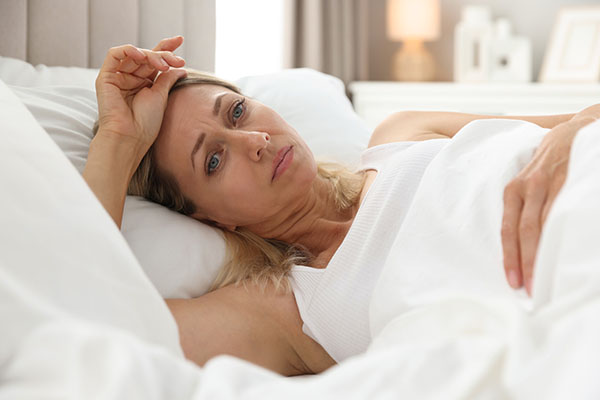
You’re in your early 40s. You sleep well, eat reasonably, exercise when you can — and yet you’ve been waking up at 3 a.m. drenched in sweat. Your periods have become unpredictable. You feel irritable in ways that seem disproportionate to the situation. Brain fog rolls in mid-sentence. You’ve started wondering if you’re developing anxiety, or if work is finally getting to you, or if something is just quietly wrong.
The answer most women in Cumming and North Atlanta don’t hear often enough: nothing is wrong. You’re in perimenopause. And you’ve probably been there for a while without knowing it.
Perimenopause is the transitional phase leading up to menopause — the point at which a woman has gone twelve consecutive months without a menstrual period. But while menopause itself is a single moment in time, perimenopause is a process, and it can begin eight to ten years before that final period. For many women, that means symptoms can start as early as the late 30s, quietly reordering daily life at an age when most women aren’t remotely thinking about menopause.
The team of physicians, certified nurse-midwives, and women’s health specialists at North Pointe OB/GYN Associates has helped generations of women in Forsyth County, Cumming, Alpharetta, and the surrounding North Georgia communities navigate this transition — and the first step is understanding what perimenopause actually is.
Why Perimenopause Is So Easy to Miss
The reason so many women spend years in perimenopause without recognizing it comes down to a fundamental misunderstanding of the timeline. Menopause, in most people’s mental model, happens somewhere around age 51 or 52. Perimenopause, therefore, must happen just before that — right?
In reality, perimenopause is defined not by your age but by the behavior of your estrogen levels, which begin fluctuating erratically years before they decline permanently. Those fluctuations are responsible for the symptoms — and because they’re erratic rather than steady, the symptoms can come and go unpredictably. A woman might have three difficult months followed by six months of feeling completely normal, which makes it very easy to attribute what happened to stress, or a bad stretch, or a particularly hard season of life.
The other factor is that perimenopausal symptoms overlap significantly with other conditions. Anxiety, depression, thyroid dysfunction, sleep disorders, and adrenal fatigue all share symptom profiles with perimenopause. Many women receive treatment for one of these conditions — or simply told their labs are “normal” — without anyone looking at the full hormonal picture.
What Perimenopause Actually Feels Like
Because perimenopause is driven by fluctuating rather than steadily declining estrogen, its symptom presentation is wider and less predictable than most women expect. The most commonly reported experiences include:
- Irregular Periods: One of the earliest and most reliable signs. Cycles may become shorter, longer, heavier, lighter, or simply unpredictable. Skipping a period entirely — then having two within a month — is not unusual.
- Vasomotor Symptoms: The hot flashes and night sweats most commonly associated with menopause often begin during perimenopause. Night sweats in particular can severely disrupt sleep without a woman ever connecting them to hormonal change.
- Sleep Disruption: Difficulty falling asleep, waking in the early morning hours, or sleeping through the night but waking unrefreshed are common perimenopausal complaints, even without obvious night sweats.
- Mood Changes: Irritability, anxiety, low mood, and emotional reactivity during perimenopause are neurological in origin — driven by the effect of fluctuating estrogen on neurotransmitter systems, particularly serotonin. These symptoms are real, they are not “just stress,” and they often respond well to hormonal management.
- Cognitive Changes: Brain fog, difficulty with word retrieval, and short-term memory lapses are reported by a significant number of women in perimenopause. These symptoms, while alarming, are typically temporary and improve after the hormonal transition stabilizes.
- Changes in Libido and Vaginal Health: Declining estrogen affects the tissues of the vagina and vulva, causing dryness, irritation, and reduced libido — symptoms that often begin subtly during perimenopause and intensify after menopause.
- Changes in Body Composition: Many women notice changes in fat distribution during perimenopause even without changes in diet or exercise, as declining estrogen alters metabolic function and promotes abdominal fat storage.
When to Come In — and What We Look For
There is no single definitive lab test for perimenopause, which is part of what makes it diagnostically tricky. Hormone levels fluctuate enough during this phase that a single snapshot often provides limited information. The diagnosis is primarily clinical — meaning it’s based on your age, your symptom pattern, and your menstrual history in the context of a thorough evaluation.
At North Pointe OB/GYN, we approach this conversation holistically. We’re not looking for a number that confirms perimenopause — we’re listening for the pattern of changes that a woman has been experiencing, ruling out other contributors like thyroid dysfunction or anemia, and building a complete picture of where she is in her reproductive life.
If symptoms are significantly impacting quality of life — sleep, mood, work, relationships — there are evidence-based management options available. Low-dose hormonal contraception can regulate irregular cycles and provide symptom relief while also offering contraceptive coverage (which is still necessary during perimenopause, as ovulation remains possible). Hormone therapy, lifestyle modifications, and targeted supplements all have roles depending on the individual.
The conversation does not need to wait until symptoms become unbearable. Women who come in proactively — who say “I think something is changing and I want to understand it” — tend to navigate this transition with significantly more confidence and comfort than those who wait until they’re in crisis.
You’re Not Becoming Someone Else
Perhaps the most important thing to understand about perimenopause is that the changes you’re experiencing are physiological, not personal. The irritability is not a character flaw. The anxiety is not weakness. The brain fog is not an early sign of cognitive decline. These are the predictable effects of a hormonal system in transition — one that has been orchestrating your health for decades and is now shifting into a new phase.
That doesn’t mean you have to endure these symptoms quietly. It means you deserve care that takes them seriously.
Explore Your Options at North Pointe OB/GYN
The physicians and women’s health specialists at North Pointe OB/GYN Associates have been caring for women throughout every stage of reproductive life in Cumming and the surrounding North Georgia communities for years. If you’ve been experiencing changes that feel unexplained — or if you simply want to understand what’s coming and how to navigate it well — we invite you to schedule a conversation with our team. We’re located at 1800 Northside Forsyth Drive, Suite 350, in Cumming, on the Northside Hospital-Forsyth campus. Call us at (770) 886-3555 to schedule your appointment.